
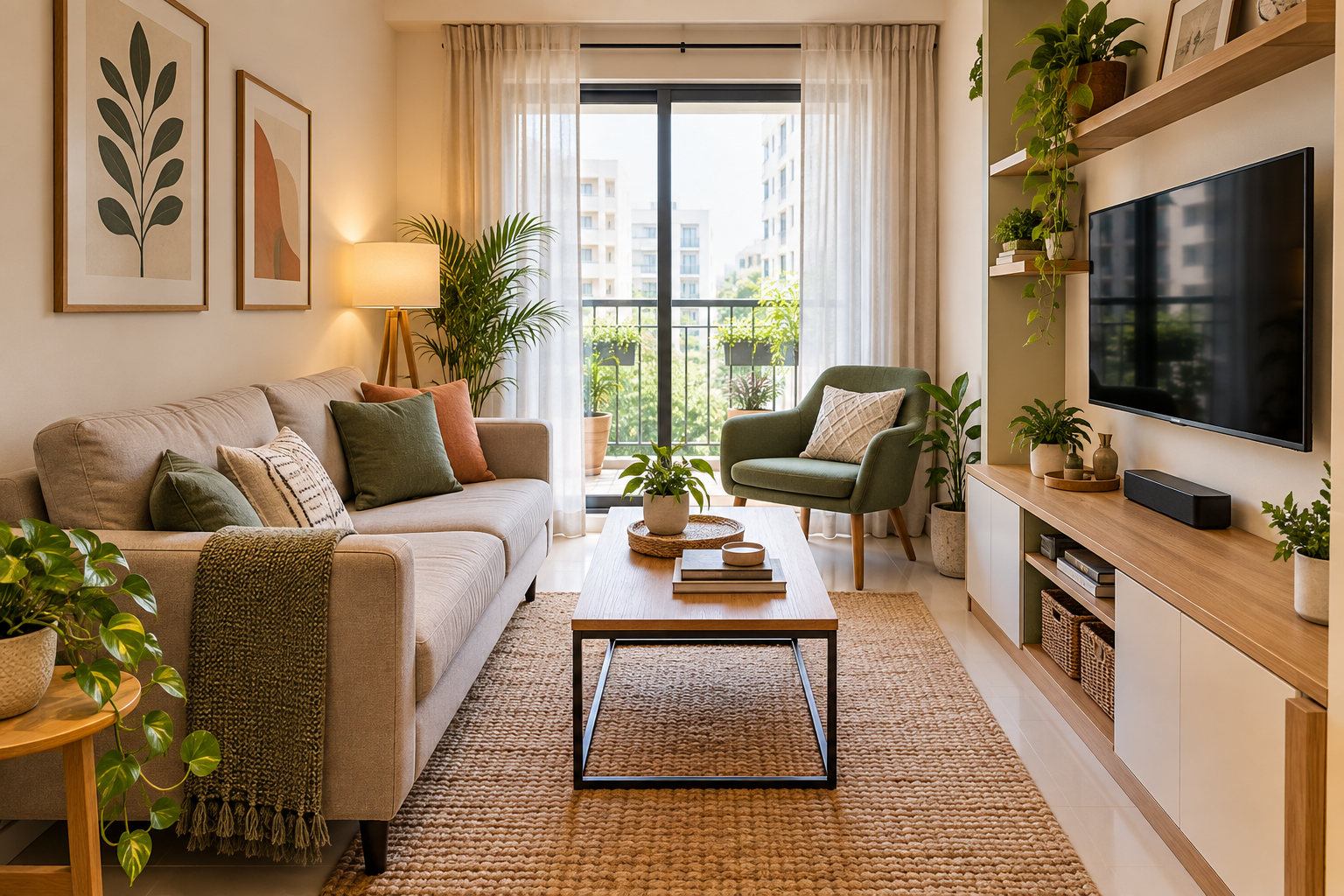
Small living rooms can be comfortable, functional, and stylish—even when you don’t have much floor space. The key is to plan the layout before you buy furniture, choose pieces that fit the room, and make every part of the space work harder.
Whether you’re furnishing a small apartment, rearranging an existing living room, or deciding whether a new sofa will fit, these 15 small living room ideas will help you plan around furniture size, walking paths, storage, lighting, and everyday use.
Quick Takeaway
For a small living room, start with measurements rather than furniture. Identify the main walking path, position the largest piece first, choose furniture based on scale, use vertical storage, and avoid filling every available area. When you’re unsure, test the layout before buying.
1. Measure Your Living Room Before Buying Anything
Start with the basics: measure the length and width of the room and note the position of doors, windows, balconies, and other fixed elements.
Then measure the furniture you already have or are considering buying. A sofa that looks compact in a showroom can feel very different once it is placed in a small room.
Not sure where to start? Try our Small Room Layout Planner to get a quick view of how your main furniture fits within the available floor area.
2. Start With the Main Walking Path
Before arranging decorative pieces, think about how people enter, leave, sit, and move through the room.
Try to keep the most important movement paths comfortable rather than filling every available section of floor with furniture. A room with slightly less furniture can often feel much more usable.
3. Put the Sofa Against the Right Wall
The sofa is usually the largest piece in a living room, so its position has a major effect on the rest of the layout.
In some rooms, placing the sofa along the longest uninterrupted wall creates the most usable arrangement. In others, positioning it near a window or perpendicular to a wall can help divide an open space into useful zones.
There is no single best sofa position. Look at the room’s entrances, focal point, windows, and traffic flow before deciding.
4. Try a Compact Two-Seater Plus Chairs
A large sofa is not always the best way to create seating in a small living room.
A compact two-seater combined with one or two lightweight chairs can give you flexibility. Chairs can be moved when you need more floor space, and the arrangement can work particularly well in rooms where a large sofa would dominate the space.
5. Consider an L-Shaped Sofa Carefully
An L-shaped sofa can provide plenty of seating while defining a corner of the room. But its footprint can also make a small space feel crowded if its dimensions are too large.
Measure both the length and depth before buying. Also consider what happens to the remaining floor space once the sofa is installed.
6. Choose Furniture Based on Scale
Small rooms do not necessarily need tiny furniture. They need furniture that is proportional to the available space.
A few well-sized pieces can work better than many small pieces spread around the room. Pay attention to both the dimensions of individual furniture and the amount of open space left around them.
Comparing furniture for your room? Use our Furniture Size Calculator to test a proposed sofa, bed, desk, dining table, or storage unit against your room dimensions.
Get the Free Planning Worksheet →
7. Keep the Center of the Room Open
If possible, avoid filling the middle of a small living room with unnecessary furniture.
An open central area can make the room easier to walk through and visually less crowded. Depending on the room, a smaller coffee table, nesting tables, or no central table at all may work better.
8. Use Vertical Storage
When floor space is limited, look upward.
Tall shelving, wall-mounted storage, and other vertical solutions can use wall space without taking up as much floor area as a wide cabinet.
The goal is not to cover every wall. Choose storage that solves a real problem and keep frequently used items easy to reach.
9. Replace Bulky Storage With One Efficient Unit
Several small storage pieces can sometimes make a living room feel more cluttered than one well-planned unit.
Look at what actually needs to be stored. Books, electronics, toys, paperwork, and everyday items may require different solutions. Grouping storage logically can make the room easier to maintain.
10. Use Furniture With More Than One Job
Multifunctional furniture can be especially useful in small apartments.
Consider pieces such as storage ottomans, nesting tables, benches with hidden storage, or furniture that can serve different purposes depending on how the room is being used.
The best multifunctional furniture is not useful simply because it has multiple features. It should solve a problem you actually have.
11. Consider a Wall-Mounted TV
If a television is part of your living room setup, mounting it on the wall can reduce the need for a large media cabinet.
This can free up some floor area, although you should still plan for cables, devices, and any storage you need below or beside the screen.
12. Use Mirrors and Light to Open the Room
Mirrors can reflect light and create a stronger sense of visual depth. Natural light can also make a small room feel more open.
Instead of adding mirrors simply because the room is small, consider where a mirror can reflect useful light or an attractive view.
Keep window areas relatively clear when possible so natural light can travel through the room.
13. Create Zones in an Open Living/Dining Area
Small apartments often combine living and dining functions in one space.
You can create visual zones without building walls. Furniture placement, rugs, lighting, and the orientation of seating can help communicate where one activity ends and another begins.
The goal is to make each area feel intentional without blocking movement between them.
14. Avoid the “Small Furniture Everywhere” Trap
Using only small furniture does not automatically make a room feel larger.
Too many small tables, chairs, shelves, and decorative objects can create visual noise and reduce usable floor space.
Instead, focus on the few pieces that support the way you actually use the room.
15. Test the Layout Before You Buy
One of the easiest ways to avoid an expensive mistake is to test the proposed layout first.
Use measurements to mark the approximate footprint of a sofa, table, cabinet, or other large piece on the floor. This gives you a much better idea of how the furniture will affect movement and remaining space.
You can also use the Small Room Layout Planner and Furniture Size Calculator before making a purchase.
Frequently Asked Questions
What is the best layout for a small living room?
There is no universal best layout. The right arrangement depends on the room dimensions, entrances, windows, focal points, furniture size, and how the room is used. Start with the main walking path and the largest piece of furniture, then build the rest of the arrangement around them.
How do I arrange furniture in a very small living room?
Start by measuring the room and identifying the main route through it. Position the largest furniture first, then add only the pieces that support how you use the room. Avoid filling every available area with furniture.
What size sofa is best for a small living room?
The best sofa is one that provides the seating you need while leaving enough usable space for movement and other important functions. Measure the sofa’s full length and depth rather than judging its size from a showroom.
How can I add storage without making a living room feel crowded?
Consider vertical storage, wall-mounted solutions, and furniture with built-in storage. Choose storage based on what you actually need to keep rather than adding cabinets simply because there is an empty wall.
How do I make a small living room look bigger?
Prioritize open walking paths, appropriately scaled furniture, natural light, uncluttered surfaces, and storage that keeps everyday items organized. Mirrors and lighter visual elements can also help create a greater sense of openness.
Explore More Small-Space Planning Ideas
If you’re planning more than just your living room, explore our Small Spaces ideas for practical approaches to small apartments, storage, furniture planning, and renter-friendly spaces.
You can also explore our Rooms section for room-specific planning ideas.
Make Your Small Living Room Work Better
A small living room does not need to follow a complicated set of rules. Start with measurements, understand how you move through the space, choose furniture based on the room rather than appearance alone, and leave enough open space for the room to function comfortably.
If you are planning a new layout, start with our Small Room Layout Planner. If you are deciding whether a particular piece of furniture will work, try the Furniture Size Calculator.
Small-space planning becomes much easier when you measure first and buy second.